Addis Ababa · Working across Africa

Data. Systems. Innovation. Transformation.

Data that changes decisions where they are made.

IDIA helps national and local decision makers across Africa, and the partners who support them, turn routine data into trusted evidence and better decisions.

Routine data feedback loop 78% REPORTING COMPLETENESS EXAMPLE DISTRICT · MAY 1 · Report 2 · Check 3 · Feed back 4 · Use
Facilities report each month. The system checks every report, sends gaps back to the facility and district, and corrected data goes to review meetings. Each cycle, completeness climbs. Illustrative figures.
Where we come from

Informed by the DASU project in Amhara Region, Ethiopia

IDIA was founded by the principal investigator of the Data Analytics, Systems, and Use (DASU) project, funded by the Gates Foundation. His experience leading DASU helped shape IDIA's mission: to catalyze innovation and knowledge creation and management, generate actionable insights, and support technology adaptation and scaling of solutions that change whole systems.

DASU was a separate project, implemented with the Amhara Regional Health Bureau, the Amhara Public Health Institute, Ethiopian government and academic partners, and the University of Manitoba. Countdown to 2030 for Women's, Children's and Adolescents' Health provided technical support through its global network across five continents. DASU progressed from a jointly designed pilot to regional use. Its outputs included:

2digital solutions: Power BI dashboards for health system performance monitoring, and a feedback system for routine health information data quality
175+health system indicators tracked in dashboards
155+districts (woredas) reached, with 6,500+ health facilities
2training modules: a nationally accredited in-service module, and an academic module in three tiers with Bahir Dar University
6policy briefs endorsed by government informing policy and practice
25M+people living in areas covered

IDIA was not a DASU partner. DASU outputs, which also included analytical capacity building and scientific manuscripts, are shown to describe our founder's experience and belong to the project and its partners.
About IDIA

Locally owned, built to scale

IDIA is an African non-governmental institute governed by a board, registered in Ethiopia in 2023 and operational since 2026, with its head office in Addis Ababa.

Our founder's experience leading DASU showed what works when governments, universities and data come together. IDIA exists to take that kind of work further, across African countries and across sectors that depend on good data.

Our ambition is to be a center for research, innovation and collaboration, working with national, regional and global partners.

Mission

Transform how Africa generates, governs, and uses data by embedding innovation, analytics, AI, and local capability where decisions are made.

Vision

A data-empowered Africa advancing systems for equity and resilience.

Values

  • Equity
  • Innovation
  • Local ownership
  • Collaboration
  • Impact

Our expertise

Data and information systems

  • Health and other information systems
  • Geospatial data systems
  • Structured and unstructured data
  • Ethical and responsible data use

Evidence and research

  • Monitoring and evaluation
  • Implementation research
  • Landscape assessments, scoping and systematic reviews
  • Evidence generation and policy translation
  • Service delivery quality improvement

Technology and innovation

  • Analytics, AI and machine learning
  • Technology adoption and adaptation
  • Sandboxing and testing
  • Automated systems and workflow efficiency
  • Work across health, climate, agriculture, education and finance

People and institutions

  • Capacity building and institutional development
  • Partnerships and local ownership
  • Equity and inclusion
  • Knowledge generation and sharing
What we do

From data to impact

All our programs follow one continuous loop of eight stages in four phases: understand, know, act and learn. Innovation and technologies sit at the center and power every stage. DASU, led by our founder, showed that this approach works at scale.

Interactive double loop with eight numbered stages in four phases: Understand, Know, Act and Learn. Innovation and technologies sit at the center and connect to every stage. A dot moves around the outer ring and each stage lights up as the dot reaches it. Use the buttons or the arrow keys to move between stages.

Cycle 1

Enables across the loop

TechnologyData systemsCapacityFinanceGovernanceOwnership

Innovation & Technologies throughout

Understand Know Act Learn Feedback

Example · Childhood immunization in one district

What happens

Takes in

Where it usually breaks

Who does what

    Feeds back into

    Partners across every stage: public institutions, private sector, academia, communities and civil society, and development partners co-design, govern, implement and learn together.

    Longer-term aim: stronger systems and lasting change, measured through documented results.

    What powers every stage
    • Artificial intelligence and machine learning
    • Interoperable digital systems
    • Geospatial targeting
    • Equity analytics
    • Efficiency and resource optimization
    • Health system strengthening
    • Climate and agriculture data
    • Skills and capacity
    • Governance and country ownership
    Flagship program

    Data to Impact (D2I)

    Evidence platform

    Brings routine, survey, CRVS and geospatial data together, checks them against each other, and turns them into analysis fast.

    Evidence hub

    A searchable library of briefs and analyses, a toolkit for judging evidence, and a small team that answers urgent questions quickly.

    Analytical skills

    Training at three levels, accredited courses run with universities, and fellowships inside government.

    Program

    Health system strengthening

    RMNCAH+N analytics, health information systems, performance and data quality monitoring, and policy briefs on priority topics.

    Program

    Digital innovation

    Feedback loops, AI data review, surveillance tools, e-learning, and AI developed with African universities.

    Emerging program

    Data for equity across sectors

    Disparities by gender, wealth and place; combined health, education, nutrition and WASH data; mapping of remote communities.

    Program

    Innovation lab

    Pilots and sandbox projects with universities, startups, telecoms and fintech, and support for new digital health solutions.

    Emerging program

    Climate, agriculture and health

    Linking weather, climate, crop and food security data with health data, so ministries can see disease linked to climate and malnutrition risks early and act before outbreaks and shortages. Agriculture and food systems are a core part of this work.

    Sectors

    One approach, five sectors

    The same cycle, from data to decision, works wherever governments plan services. We proved it in health and are applying it to four more sectors.

    Foundation

    Health

    Routine health facility data, data quality, performance dashboards and evidence to policy and practice pathways, approaches proven at scale in DASU, led by our founder.

    Emerging

    Climate

    Early warning that links rainfall and temperature to disease and nutrition risk, so services can prepare.

    Emerging

    Agriculture

    Crop, soil and food security data joined with health and nutrition data, so farm and health planning share one picture.

    Emerging

    Education

    School and learning data for planning, plus applied analytics training and student projects with universities.

    Emerging

    Finance

    Analytics that track public budgets against results and show who financial services still miss.

    Innovations

    Prototypes powered by AI and ready for investment

    Three ventures built on what our team learned working with governments and communities.

    • Climate & health

      Demo available upon request
    • Maternal & newborn health

      Demo available upon request
    • Circular economy

      Demo available upon request
    Interested in collaborating?Talk to us about partnership, piloting or investment.
    Get in touch
    Tools

    One toolkit for the whole cycle, from data to decision

    Each tool does one job in the cycle from data to decision. Eight apply approaches proven at scale in DASU, the project our founder led. The rest are being built on that experience, designed to work with DHIS2 and to be run by government teams.

    01

    Collect and check

    Clean, complete data before anyone analyzes it.

    • Approach proven in DASU

      FLoST data quality monitoring

      Flags incomplete, late or inconsistent facility reports and sends them back for correction.

    • Approach proven in DASU

      Data extractor

      Pulls routine health facility data from DHIS2, plus survey data, so no one retypes spreadsheets.

    • In development

      AI data review

      Machine learning that spots implausible values and patterns a person would miss.

    02

    Analyze

    Turn data into evidence, at the level where decisions are made.

    • Approach proven in DASU

      Survey analytics

      Prepared routines for DHS and other household surveys.

    • Approach proven in DASU

      Automated indicator computation

      Calculates program indicators the same way, every month, for every district.

    • Approach proven in DASU

      Equity analytics engine

      Shows who is being left behind, by place, wealth and gender.

    03

    Decide

    Put the right evidence in front of decision makers.

    • Approach proven in DASU

      Performance dashboards

      Power BI dashboards that monitor health system performance and track progress, reviewed each month by national and local decision makers.

    • In development

      Geospatial coverage optimizer

      Maps service gaps and suggests where staff, supplies and outreach will reach the most people.

    • In development

      Climate and health early warning

      Combines rainfall, temperature, crop and health data to flag districts at rising risk of malaria, cholera or malnutrition.

    04

    Act and learn

    Put evidence to use, close the loop and build skills.

    • Approach proven in DASU

      Evidence to policy and practice pathway

      Turns analysis into policy briefs endorsed by government, then into actions that teams agree and follow up at review meetings.

    • Approach proven in DASU

      Live feedback app

      Mobile alerts so facilities see and fix problems within a week.

    • In development

      E-learning engine

      Courses on data use that health workers take at their own pace.

    05

    Connect and test

    Make systems work together, and test new ideas safely.

    • In development

      Data exchange hub

      Moves data between DHIS2 and other systems without typing it in again.

    • In development

      Innovation sandbox

      A safe space to pilot new tools on real, de-identified data.

    Built for district, regional and national teams, and for partners tracking results.

    "Approach proven in DASU" means the method was used at scale in the DASU project. The DASU tools themselves belong to that project and its partners.

    Training

    Skills that stay in the system

    Our training draws on two pathways developed in DASU: a nationally accredited in-service module on routine data use, available through Ethiopia's iHRIS platform, and an academic module in three tiers developed with Bahir Dar University.

    LevelForCovers
    LeadershipSector leaders, directors and senior managersActionable insights: reading dashboards and briefs, asking the right questions of data, and using evidence in planning, budgets and review meetings
    OperationsFacility and program managers, HMIS and IT teamsAutomated data systems, workflow efficiency, and using data to improve the quality of service delivery
    Private sectorBusinesses, start-ups, entrepreneurs and innovation hubsData-driven innovation, using evidence to create employment and jobs, and measuring social impact alongside business results
    PhilanthropyFoundations, philanthropists, donors and their program teamsMeasuring social impact, knowledge generation and transfer, and using evidence to guide grant making and learning
    FoundationPlanners and program officersReading data, visualization, data stories
    IntermediateM&E and technical staffExcel, Power BI, Stata, R
    AdvancedAnalysts and researchersModeling, machine learning, causal inference

    Leadership sessions are short and practical, built around each team's own data. We also run workshops and webinars, offer mentorship and fellowships, and keep a knowledge library for learning at your own pace.

    Scaling up

    From Ethiopia to Africa, and global learning

    DASU proved the model in Ethiopia. IDIA is built to take it further, one step at a time, with each government owning what it adopts.

    Ethiopia
    Where we are heading

    What we have done, and what we are working towards

    1. 2023

      Registered nationally in Ethiopia

    2. 2026

      Fully operational

      Offices open in Addis Ababa and Bahir Dar.

    3. In progress

      Data analytics and use courses

      Drawing on training pathways developed in DASU.

    4. In progress

      Digital innovation for service delivery

      AI-enabled digital systems, geospatial coverage optimizer, and data innovation hub.

    Partner with us

    Work with IDIA

    We work with funders, government, universities, NGOs, UN agencies and technology companies.

    What we offer

    • Solutions designed with you and built to scale
    • Evidence, and practical help putting it to use
    • Joint research and development
    • Open source tools and local analytics platforms
    • Training, and help aligning work with national policy

    Why IDIA

    • We work with and through government systems
    • We focus on communities that services reach least
    • Research is part of everything we deliver
    • We work across sectors
    • We report on results

    Membership

    Membership for individuals and institutions opens soon. Write to [email protected] to be told when it does.

    Careers and opportunities

    Openings, fellowships and internships are on the Careers page.

    Start a conversation
    People

    Governance and teams

    Board of directors

    IDIA is governed by a board of five members that sets strategy, approves budgets and oversees management.

    • Dessalegn M., PhD

      Board Chair

      IDIA’s founder, Dessalegn brings expertise in global health, health systems, data science, and digital innovation. He led the completed Gates Foundation-funded DASU project and received a special recognition award from a government partner for his contribution. He is Ethiopia Country Lead for Countdown to 2030, based at the University of Manitoba, and adjunct faculty at Bahir Dar University.

    • Assefa D., PhD

      Board Member

      A former director of the Adet Agricultural Research Center at ARARI, Assefa brings expertise in crop and soil science, watershed management, and translating research into practice. His experience supports IDIA’s agriculture and climate work.

    • Zelalem A., MSc

      Board Member

      Zelalem brings experience leading relief, development, and humanitarian programs in Ethiopia and internationally. Trained in horticulture, he helps keep community priorities central to IDIA’s agriculture and cross-sector work.

    • Molla K., MD

      Board Member

      An internal medicine specialist, Molla brings clinical experience to IDIA’s health work. He helps ensure that health systems and digital tools support clinicians and person-centered care.

    • Simachew M., MSc

      Board Member

      A mathematics faculty member at Bahir Dar University, Simachew teaches applied mathematics to engineering students. He supports student capstone projects and helps assess IDIA’s ideas using data.

    Finance and oversight

    • Dessie E., MSc

      Financial Officer
    • Nigus B., MSc

      Auditor

    An advisory board of experts from government, academia and development partners is being formed.

    Leadership and operations

    • Executive leadership
    • Policy, strategy and evidence uptake
    • Stakeholder engagement and communications
    • Program and project support
    • Administration and operations
    • Accounting and finance

    Technical and innovation

    • Data innovation
    • Data analytics and insights
    • Geospatial intelligence
    • Big data, AI and machine learning
    • Technology adaptation and adoption
    • IT and systems development
    • Digital health and system integration
    • Impact, monitoring and learning
    • Research and knowledge management
    Partners

    Our partners

    IDIA is building its first partnerships. Partners are listed here as agreements are signed.

    Strategic partners

    Seven Lakes Green Solutions logo
    Seven Lakes Green SolutionsCircular economy partner. Turning urban organic waste into biofertilizer for Ethiopian farmers.
    Partnership in progressAnnouncement coming soon
    Partnership in progressAnnouncement coming soon
    Partnership in progressAnnouncement coming soon

    A Global Network, Rooted in Ethiopia

    Connections across continents

    IDIA's founders and partners have built a network across Africa, North America, South America, Europe and Australia. We aim to grow it to extend our reach in global health. Tap or click a point on the map to see its link.

    Governance and data responsibility

    How we stay accountable

    Our data principles

    • Data belongs to the institutions and communities it describes. Governments own the systems we help build.
    • We use de-identified or aggregate data wherever possible.
    • We work under national data protection law and partner data sharing agreements.
    • We keep data secure, with access limited to people who need it.
    • We share methods and tools openly, so others can check and reuse them.

    Governance and transparency

    • Registered as a non-governmental organization in Ethiopia since 2023.
    • Governed by a board of five directors.
    • Finances managed by a financial officer and reviewed by an auditor.
    • Annual reports and audited financial statements will be published on this page.

    Privacy on this website

    This website does not use cookies. Visits are counted with web analytics that collects no personal data. If you email us, we use your details only to reply.

    Disclaimer

    Mentions of governments, universities, funders and projects describe past or related work and do not imply their endorsement of IDIA. Figures from the DASU project belong to that project and its partners.

    Resources

    Publications and learning

    Publication

    Learning from Ethiopia's success in reducing maternal and neonatal mortality through a health systems lens

    Melesse DY et al. BMJ Global Health 2024. PubMed

    Related project

    DASU: Data Analytics, Systems, and Use

    The project, funded by the Gates Foundation and led by IDIA's founder, was implemented with the Amhara Regional Health Bureau, the Amhara Public Health Institute, Ethiopian government and academic partners, and the University of Manitoba. Its outputs included Power BI dashboards tracking 175+ health system indicators and a routine data quality feedback system. dasu.cdipp.org

    Impact stories, learning briefs, case studies and tool guides will be added here as they are published.

    News and events

    News and events

    What IDIA and the work it builds on have been doing, and where to meet us.

    Latest news

    New website and Data Lens launched

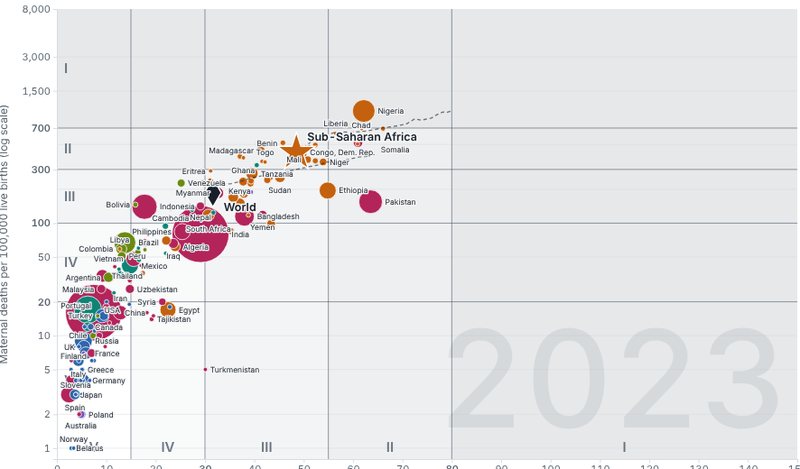
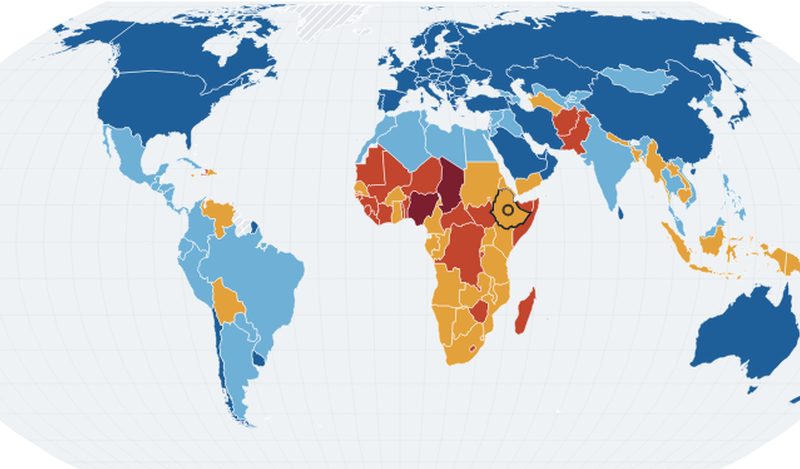
    IDIA's new website opens with the Data Lens: the Mortality Transition Explorer and the Transition Atlas, built on UN estimates and updated automatically. Explore the Data Lens

    Amhara Regional Health Bureau recognizes DASU contributions

    IDIA's founder received a Special Recognition Award for the DASU work.

    IDIA begins full operations

    Offices open in Addis Ababa and Bahir Dar.

    Events

    Upcoming

    No public events scheduled yet

    Webinars, workshops and talks will be listed here with dates, places and how to join.

    Invite us

    Speaking and workshops

    To invite IDIA to speak, or to run a workshop on data use for your team, write to [email protected] with "Event" in the subject.

    Media

    For interviews, comments or images of IDIA's work, write to [email protected] with "Media" in the subject. Data Lens visuals can be reused with credit to IDIA and the data sources cited in each one.

    Careers and opportunities

    Grow with IDIA

    We are building a team that turns data into better decisions across Africa. Here is how you can be part of it.

    Openings

    Current positions

    There are no open positions right now. New roles will be posted on this page first. You are welcome to send an expression of interest at any time.

    Fellowships

    Data fellowships

    Early-career analysts work alongside government health teams on real data and real decisions, with mentoring from IDIA. Fellowships open as funding allows.

    Students

    Internships and graduate research

    For students in data science, epidemiology, biostatistics, public health, computer science and related fields who want supervised, practical research experience.

    Experts

    Consultants and expert roster

    Specialists in analytics, AI, geospatial work, health systems, evaluation, climate, agriculture or education can join our roster for project work.

    Volunteer

    Volunteers and advisors

    Experienced professionals who want to give time and advice to strengthen data systems in Africa.

    How to apply

    Send an expression of interest

    • Email [email protected]
    • Subject: "Expression of interest: your area"
    • Attach your CV and a short note on what you want to work on
    IDIA recruits on merit and welcomes applications from women, people with disabilities and people from all regions. We never charge fees to apply or to be hired. If anyone asks you for money in IDIA's name, please tell us at [email protected].
    FAQ and help

    Questions people ask us

    Short answers to common questions. You can also use Chat with IDIA at the bottom right, or write to [email protected].

    What is IDIA?

    The Institute for Data Innovation Africa is an African non-governmental institute, headquartered in Addis Ababa. We help national and local decision makers, and the partners who support them, turn routine data into trusted evidence and better decisions. More about us

    Is IDIA part of the DASU project?

    No. DASU was a separate project, funded by the Gates Foundation and implemented with the Amhara Regional Health Bureau, the Amhara Public Health Institute, Ethiopian partners and the University of Manitoba. IDIA was founded by DASU's principal investigator and builds on that experience. DASU outputs belong to the project and its partners.
    Where does IDIA work?

    We start in Ethiopia and work towards partner countries across Africa, with a network that reaches five continents. See how we plan to scale

    Which sectors do you work in?

    Health is our foundation. We also work on climate, agriculture, education and finance, because the same path from data to decision applies across sectors. Sectors

    How can my organization partner with IDIA?

    Write to [email protected] and tell us which decision you want to improve. We work with governments, funders, universities, NGOs, UN agencies and technology companies. Partner with us

    Do you offer training?

    Yes, from leadership briefings for sector leaders to foundation, intermediate and advanced courses in data analytics and use. Training and capacity building

    Can I see a demo of your innovations?

    Yes. Demos are available on request for our climate and health, maternal and newborn health, and circular economy work. Write to [email protected] with "Demo" in the subject. Innovations

    Where does the Data Lens data come from?

    From UN estimates of maternal deaths, stillbirths and newborn deaths, and UN population data, published through the World Bank. The visualizations check for updated estimates automatically. Each one cites its sources. Data Lens

    Why does the Data Lens show 151 countries?

    It follows the published transition model, which studied the 151 countries with at least 1 million people in 2000. You can add the smaller countries with a checkbox, with a note on why they were left out of the study.

    Can I reuse your charts in my presentations?

    Yes. Please credit IDIA and the data sources named in each visualization. Interpretations are IDIA's and do not represent the views of the data providers.

    How do you protect data?

    Data belongs to the institutions and communities it describes. We use de-identified or aggregate data wherever possible, follow national data protection law and data sharing agreements, and keep access limited. This website does not use cookies. Our data principles

    Are there jobs or internships?

    See the Careers page for openings, fellowships, internships and the expert roster.

    How do I contact you about Ethiopia?

    Write to [email protected] and also copy [email protected]. Contact details

    Contact

    Work with us

    Tell us which decision you are trying to improve, and we will tell you how data could help.

    All inquiries

    Write to

    [email protected]

    Matters specific to Ethiopia

    Also copy

    [email protected]
    Send us a message
    Your email app will open with your message ready to send to [email protected].

    Head office

    Addis Ababa, Ethiopia

    Regional office

    Bahir Dar, Amhara Region, Ethiopia